
14% Off

Route Length

Max Altitude

Trek Duration

Trek Difficulty
Base Camp Area

Pickup Point
10+ Years Age
First timer can apply, previous trekking experience is more appreciated.
Cover 5 km of distance in 30 minutes without a stress.
+917055048487, +917055048488
trekkingcompass@gmail.com
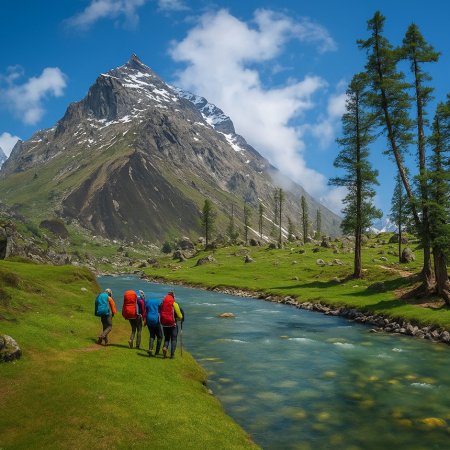
Hampta Pass Trek is one of the most sought-after trekking trails in Himachal Pradesh, offering breathtaking views and an exhilarating experience for adventure enthusiasts. Nestled in the Pir Panjal range of the Himalayas, this trek offers a striking contrast in landscapes, from lush green valleys and dense forests to barren, rugged terrain and snow-clad mountains. Hampta Pass serves as a gateway between the verdant Kullu Valley and the arid, cold desert of Lahaul, making it a fascinating trek for those seeking variety in scenery. The trek is moderately challenging and suitable for both seasoned trekkers and beginners with good physical fitness. It spans a total of five days, during which trekkers gain a comprehensive experience of the Himalayan landscape, weather, and terrain.
The journey begins in Manali, a popular hill station known for its vibrant culture and stunning natural beauty. From there, trekkers proceed through scenic villages, dense pine forests, and grassy meadows to reach Chika, the first campsite. As the trek progresses, they traverse river crossings, glacial beds, and steep ascents, leading to the Hampta Pass summit at 14,100 feet. The view from the top is unparalleled, with panoramic vistas of snow-capped peaks and lush valleys. On descending, trekkers head toward Chatru, a quaint village in Lahaul, and then drive to the beautiful Chandratal Lake, renowned for its crystal-clear waters and serene surroundings. The final leg involves a return to Manali, marking the end of a truly memorable adventure.
This trek is not only about the visual grandeur but also about the rich experience of traversing different ecosystems, interacting with locals, and witnessing the raw beauty of the Himalayas. Each day of the trek offers something unique—be it the tranquility of Chika, the snowy expanse of Balu Ka Ghera, the thrill of crossing Hampta Pass, or the surreal beauty of Chandratal. Hampta Pass Trek is a complete package for nature lovers, thrill-seekers, and anyone looking to escape the mundane.
Chika Altitude: 10,120 ft (3,084 m)
Jobra Altitude: 9,600 ft (2,926 m)
Altitude Gain: 3,395 ft (1,034 m)
Travel Distance: 24 km + 2.5 km = 26.5 km (approx.)
Travel Hours: 1.5 hrs + 2 hrs = 3.5 hrs (approx.)
The first day of the trek begins with an early morning drive from Manali to Jobra, covering a distance of approximately 24 kilometers in 1.5 hours. The drive itself is scenic, with views of the Beas River and lush green forests of pine and deodar. Jobra, situated at an altitude of 9,600 feet, serves as the starting point for the trek. From here, trekkers embark on a relatively easy 2.5-kilometer hike to Chika, gaining an altitude of around 520 feet.
The trail to Chika is well-marked and surrounded by dense forests. As trekkers walk along the narrow path, they are greeted by the soothing sound of the Rani Nallah flowing beside them. The lush greenery and towering trees create a refreshing ambiance, making the initial leg of the trek enjoyable. En route, trekkers pass through small clearings and meadows, where they can take short breaks and soak in the beauty of the surroundings.
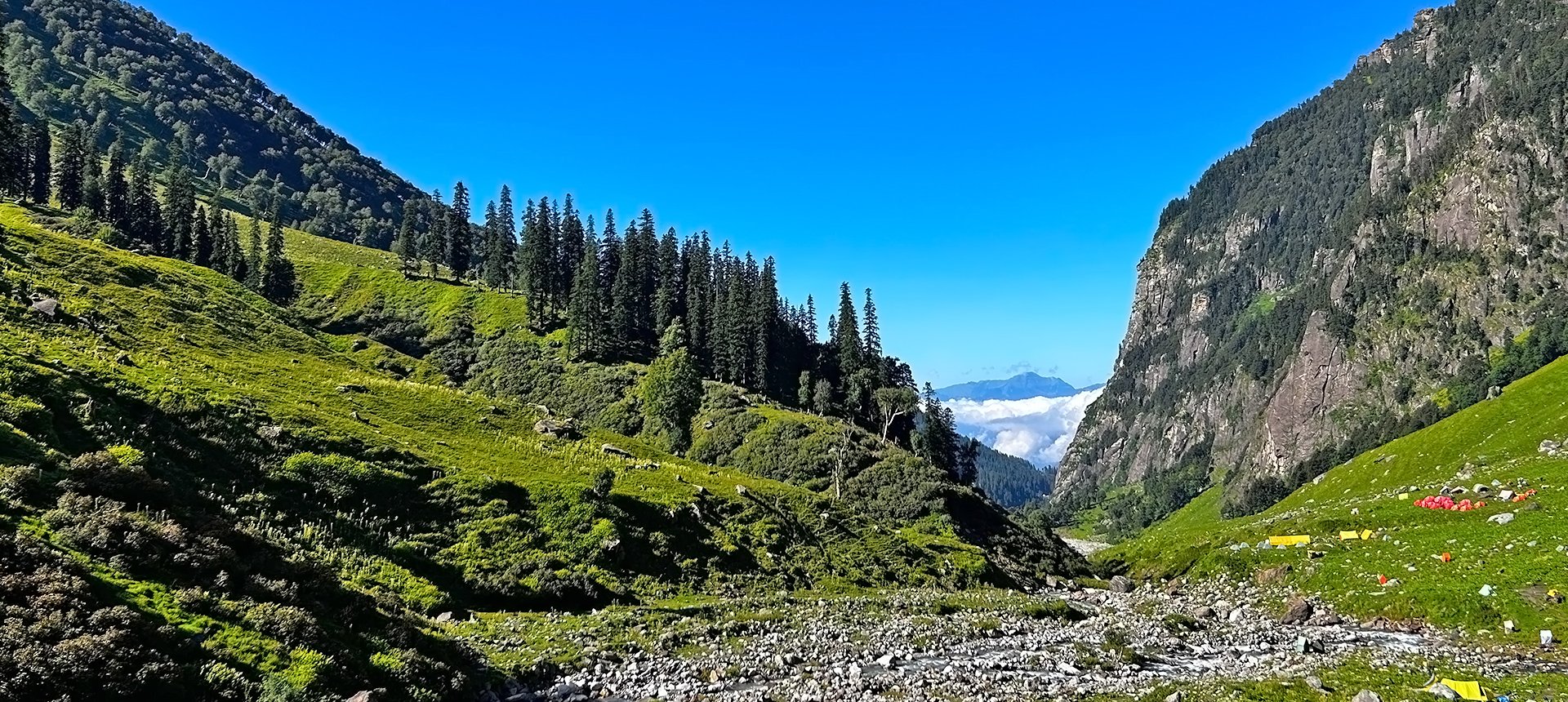
Upon reaching Chika, trekkers are welcomed by a vast open meadow flanked by mountains on either side. The campsite is set near the river, providing a picturesque location to rest and acclimatize. After setting up camp, trekkers can explore the nearby area, enjoy a warm meal, and prepare for the next day’s journey. Chika’s serene environment and the star-studded sky at night make for a perfect end to the first day.
Balu Ka Ghera Altitude: 12,300 ft (3,749 m)
Altitude Gain: 2,180 ft (664 m)
Travel Distance: 9 km
Travel Hours: 9 to 10 hrs (approx.)
The second day of the trek involves a gradual ascent from Chika to Balu Ka Ghera, covering a distance of 9 kilometers in approximately 9 to 10 hours. Trekkers gain an altitude of about 2,180 feet as they move from 10,120 feet at Chika to 12,300 feet at Balu Ka Ghera. The trail meanders through lush meadows, river crossings, and boulder-strewn paths, making it a moderately challenging day.
As the trek begins, the trail follows the Rani Nallah, offering mesmerizing views of the valley below. Trekkers will encounter several small streams and natural rock bridges, adding to the adventure. The landscape gradually changes, with dense forests giving way to open grasslands and patches of snow. Marmots and wildflowers are common sights along the way, adding a touch of life to the otherwise rugged terrain.
Balu Ka Ghera, meaning ‘bed of sand,’ is a vast campsite surrounded by snow-capped peaks. The site gets its name from the sandy patches found near the riverbed. Upon arrival, trekkers set up their tents and relax. The evening is spent acclimatizing, sharing stories, and enjoying a hot meal amidst the pristine wilderness. The snowfields around Balu Ka Ghera signal the proximity of Hampta Pass, adding to the excitement for the next day.
Hampta Pass Altitude: 14,100 ft (4,298 m)
Shea Goru Altitude: 12,800 ft (3,901 m)
Altitude Gain: 1,800 ft (549 m)
Altitude Loss: 1,300 ft (396 m)
Travel Distance: 7 km
Travel Hours: 9 hrs (approx.)
Day 3 is the most challenging and rewarding part of the trek, as it involves crossing the Hampta Pass. Trekkers start early to cover the 7-kilometer distance, which takes about 9 hours. The ascent to Hampta Pass, situated at 14,100 feet, involves a steep climb, while the descent to Shea Goru at 12,800 feet requires careful navigation through snow and rocky terrain.
The day begins with a gradual climb over snow patches and boulders. Trekkers need to pace themselves, as the thin air and steep incline can be taxing. As they ascend, the views become increasingly spectacular, with the Dhauladhar range in the backdrop. Reaching the summit of Hampta Pass is a moment of triumph, offering panoramic vistas of the contrasting landscapes of Kullu and Lahaul.
The descent from the pass is steep and tricky, requiring caution. Trekkers often encounter patches of snow and loose rocks, making trekking poles essential. Shea Goru, the campsite for the night, is a beautiful location set beside a river, with a stunning view of the surrounding peaks. The third day ends with a sense of accomplishment and anticipation for the upcoming journey to Chandratal.
Chandratal Altitude: 14,050 ft (4,282 m)
Chatru Altitude: 10,990 ft (3,350 m)
Altitude Loss: 1,810 ft (552 m)
Altitude Gain/Loss: 3,060 ft (933 m)
Total Altitude Loss: 4870 ft (1,484 m)
Travel Distance: 7 km + 48 km ( 54 km approx.)
Travel Hours: 5 hrs + 4 hrs = 9 hrs (approx.)
The fourth day involves a trek from Shea Goru to Chatru, followed by a drive to Chandratal Lake. Trekkers cover a distance of 7 kilometers on foot, which takes about 5 hours, and then drive 48 kilometers to Chandratal, taking another 4 hours. The altitude loss from Shea Goru to Chatru is around 1,810 feet, making it a relatively easy descent.
The trail from Shea Goru to Chatru is scenic, with the Chandra River flowing alongside. Trekkers cross a few streams and navigate rocky paths, enjoying views of barren mountains and glaciers. Chatru, located at 10,990 feet, is a small settlement where trekkers can rest and have a meal before continuing the journey to Chandratal.
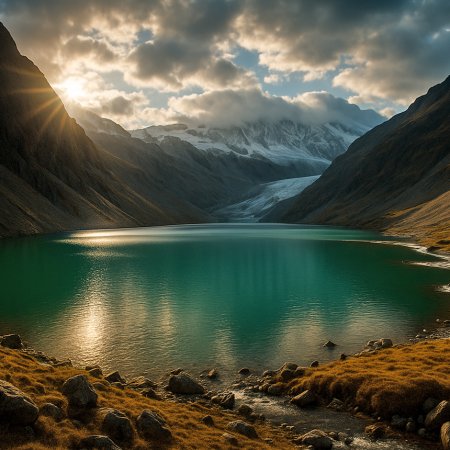
The drive to Chandratal is a highlight of the trek, offering breathtaking views of the Spiti Valley. The road is bumpy but worth the effort, as Chandratal Lake, situated at 14,050 feet, is a sight to behold. The lake’s pristine blue waters and surrounding mountains create a surreal landscape. Trekkers spend time exploring the area, capturing memories, and enjoying the tranquility before heading back to Chatru for the night.
Manali Altitude: 6,725 ft (2,050 m)
Altitude Loss: 4,265 ft (1300 m)
Travel Distance: 66 km (drive)
Travel Hours: 6 hrs ( hrs approx.)
The final day of the trek involves a 66-kilometer drive from Chatru to Manali, taking approximately 6 hours. The drive offers stunning views of the Lahaul and Kullu valleys, with the changing landscape providing a fitting end to the trek. Trekkers pass through the iconic Rohtang Pass, known for its breathtaking scenery and challenging weather conditions.
As the vehicle descends towards Manali, the arid terrain of Lahaul transitions into the lush greenery of Kullu. The return journey provides ample time for reflection on the incredible adventure undertaken over the past few days. Upon reaching Manali, trekkers can relax, explore the town, and indulge in some local delicacies.
The Hampta Pass Trek concludes with fond memories, newfound friendships, and a sense of accomplishment. It’s an adventure that leaves trekkers with stories to tell and experiences to cherish for a lifetime.
Accommodation
Meals (Vegetarian only with eggs option available)
Nutritious meals from Day 1's dinner to last day's breakfast, following the itinerary schedule.
Expert Support
First Aid Preparedness
Fully equipped medical kit including a stretcher, oxygen cylinder, blood pressure monitor, oximeter, and stethoscope to ensure safety throughout the journey.
Storage Facilities :- A secure room at the base camp to store additional luggage not needed during the trek.
Permits and Entry Fees :- Coverage of all necessary permits and entry fees, in line with standard charges for Indian nationals.
Transportation :- A round-trip transport from the pick-up point and back at the same point as a part of the itinerary.
Trek Equipment
Insurance :- Personal insurance is mandatory and not included in the package.
Personal Expenses :- Any expenses of a personal nature, including shopping, snacks, hiring a mule or porter for carrying your belongings, or acquiring personal equipment.
Emergency Costs :- Expenses arising from emergency evacuations, hospitalization, or any medical treatments required.
Unspecified Services :- Any services or items not explicitly mentioned under the "INCLUSIONS" section.
Food Costs :- We will not cover any food costs during your transit to and from the base village.
Trekking is not only about enjoying the change of scenery but also about being responsible. Our (Trekking Compass) responsibility is to provide you with an opportunity for a safe trek. But, how do we do that? We do that when you fulfill your end of the responsibility and are honest with us. To keep you safe we need to be sure there isn’t any inherent threat to your being.
Treks are at higher altitudes and it becomes difficult, almost impossible to provide you with immediate medical assistance. Therefore, we cannot help you if you don’t help us. Trekking is only one of the things you can do, but there are plenty of other things to do too. Don’t risk your life for the thrill.
To approach a trek with utmost safety, we want you to submit the following documents:
Personal Confirmation Statement (Compulsory for anyone over 18 years)
You are participating in a trek at high altitudes and it comes with its own sets of risks. This Personal Confirmation Statement will make sure that you understand all the risks you're buying into. Trekking Compass wants you to confirm your complete understanding of these risks so that you come prepared for any mental or physical challenges ahead.
This statement is also a declaration from you that, "All the information I have provided, including medical conditions, is true. If found false under any circumstances, I will be held accountable and it has nothing to do with Trekking Compass."
We have the utmost empathy for you and will do our best to help wherever possible, but only after assessing your readiness and safety for the trek. This is how our team will adequately prepare for whatever risks we might face during the journey. Concerning individuals are requested to thoroughly cross-check the requirements and only then sign the document.
Parent/Guardian Approval Statement (Compulsory for anyone below 18 years)
For participants under 18 years of age, the Parent/Guardian Approval Statement is essential to confirm that a legal guardian understands and consents to the participation in the trek. Once we have this document, we are affirmed that the parent or guardian is fully aware of the risks involved in trekking at high altitudes and is consenting to their child's participation.
No underage (below 18+) children are welcome on the trek without their parent's consent. Submission of this document reassures us that parents are approving that their child meets the health and fitness requirements for the trek, after a thorough examination.
This legal confirmation holds the parent liable for any discrepancies, freeing Trekking Compass from any liabilities for the same. Parents are requested to thoroughly cross-check the requirements and only then sign the document.
Medical Liability Waiver
The Medical Liability Waiver makes sure participants acknowledge the health risks associated with trekking at high altitudes. Common ailments during treks include altitude sickness, dehydration, muscle cramps, hypothermia, and fatigue, all of which can significantly affect your trekking experience. Additionally, weather changes and the physical demands of the terrain may exacerbate pre-existing conditions.
If you have pre-existing medical conditions such as asthma, diabetes, or heart issues, it’s vital to inform us and carry your necessary medications. Trekking Compass cannot provide immediate medical assistance in remote areas, so having the essential medications, such as inhalers, insulin, or any other prescriptions, is crucial for your safety during the trek.
By signing this waiver, you confirm that you are in good health and have taken the necessary precautions. You acknowledge these risks and agree not to hold Trekking Compass liable for any medical issues or accidents that may arise during the trek.
For any further doubts about anything mentioned above, below is our contact information:
OFFICE ADDRESS: Lane No. 4 Krishna Vihar Mohkampur, Dehradun, Uttarakhand, 248005
PHONE NUMBER: +91 7055048487, 7055048488
EMAIL ADDRESS: info@trekkingcompass.com
The Hampta Pass Trek requires reaching Manali, where you meet the Trekking Compass team. Manali (530 km from Delhi), is picturesque, giving you the perfect excuse for utilising your must-have buffer day. Given the potential for landslides, rain, and occasional political unrest in mountainous regions, it's prudent to include a buffer day in your itinerary. It's a 5 days and 4 nights long trek, so you need to have a day 6.
Reaching Manali from Delhi:
Get to Delhi from your place, if you're not from Punjab, Chandigarh, Uttarakhand, Himachal, Jammu & Kashmir. Things are a little bit different for them, they'll have to take their specific buses to Manali, or make stops wherever necessary. But, here's how to reach Manali from Delhi:
Medium: BUS
Delhi to Manali (AC Volvo Buses):
Departure Point: ISBT Kashmere Gate, Delhi.
Duration: Approximately 12 to 14 hours.
Frequency: Regular departures, especially in the evening. This allows for overnight travel.
Several state-run and private operators provide comfortable AC Volvo bus services. Opting for government-operated buses is advisable. They steer clear of delays and adhere to schedules, thus being more reliable than private operators.
Medium: TRAIN
Delhi to Chandigarh Railway Station:
Train Options: Multiple trains are available from New Delhi Railway Station to Chandigarh.
Duration: Approximately 3 to 5 hours.
1: Unchahar Express - 14217 - 3 hrs
2: NDLS CDG Shatabdi - 12045 - 3 hrs 30 mins
3: SNSI Kalka Exp - 22455 - 3 hrs 45 mins
4: Goa Smprk K - 12449 - 4 hrs 50 mins
5: CDG Skranti Exp - 22685 - 4 hrs 25 mins
From Chandigarh, Manali is about 315 kilometers away. You can hire a taxi or board a bus to Manali, which takes around 8 to 9 hours. This route offers a break in the journey, and you get to explore Chandigarh.
Medium: FLIGHT
Fly Directly to Bhuntar Airport:
From Kullu-Manali Airport, taxis and buses are available to reach Manali. Due to weather conditions, flights can be unpredictable, so it's essential to check schedules and availability in advance.
Note: Ensure that your chosen mode of transport brings you to Manali a day before the trek commences (Day 0). This allows acclimatization and preparation.
Flights to Delhi are available from major cities like Mumbai, Kolkata, Bengaluru, Chennai, and Hyderabad. From Delhi, you can proceed to Manali using the options mentioned above.
What happens on the drop-off day?
While scheduling your onward travel from Manali, do consider potential delays due to weather or road conditions. Therefore, either schedule it,
starting late in the evening or the following day.
Special Case: What if you miss our pick-up?
If you miss the scheduled pick-up, here are alternative ways to reach the trek starting point:
1:Delhi to Manali (cab/bus):
2: Delhi to Chandigarh to Manali to Jobra (train/bus/cab):
3:Delhi to Kullu (flight) to Manali to Jobra (cab/bus):
| Backpack with rain cover / Trolley Bag | Main bag for gear. |
| Day pack with rain cover (20 - 30 L) | For day essentials, if the main pack is off-loaded. |
| Walking stick | Recommended (at least one). |
| Water bottle/ Hydration pack | 2 bottles (1L each) or 1 hydration pack and 1 bottle. |
| Snacks | Energy bars, dry fruits, ORS/electrolytes. |
| Personal Medical Kit | As prescribed by your doctor. |
| T-shirts (Synthetic, quick-dry) | 2 full-sleeve, 2 half-sleeve. |
| Fleece T-shirts | 2 pieces. |
| Wind-stopper / Fleece jacket (upper) | 1 piece. |
| Windproof jacket | 1 piece |
| Down feather / Hollow jacket | 1 piece |
| Thermal innerwear (Upper & Lower) | 1 set. |
| Trekking pants (Synthetic, quick-dry) | 3 pairs. |
| Wind-stopper / Fleece pants (lower) | 1 pair. |
| Waterproof gloves | Not required. |
| Fleece / Woolen gloves | 1 pair. |
| Poncho / Waterproof jacket and pants | 1 set. |
| Head torch / Hand torch | 1 piece. |
| Sun cap | Required. |
| Woolen cap | 1 piece. |
| Balaclava | 1 piece. |
| Buff/ Neck gaiters | 1 synthetic, 1 woolen. |
| Sunglasses | UV protection with side covers (for spectacle users: contacts or photochromatic lenses). |
| Trekking shoes (waterproof, high ankle, good grip) | 1 pair. |
| Floaters / Flip-flops | 1 pair. |
| Cotton socks | 4 pairs. |
| Woolen socks | 2 pair. |
| Sunscreen | 1 piece. |
| Moisturizer | 1 piece. |
| Lip balm/ Chap-stick | 1 piece. |
| Toothbrush and toothbrush | 1 set. |
| Toilet paper and wipes | 1 pack each. |
| Soap/ Hand sanitizer | 1 piece. |
| Quick-dry towel | 1 piece. |
The Hampta Pass Trek is one of Himachal Pradesh’s most beautiful crossover treks, connecting the lush Kullu Valley with the arid landscapes of Lahaul and Spiti. Starting from Manali (Jobra), the trek crosses the dramatic Hampta Pass (4,270 m / 14,100 ft) and descends to Chatru before optionally visiting the surreal Chandratal Lake. What makes this trek famous is the unbelievable contrast in terrain — one side filled with forests, waterfalls, and flowers, while the other is stark, cold, and desert-like. It’s often described as a “complete Himalayan experience in 5 days”, offering everything from green meadows to glaciers, river crossings, and mountain passes.
The trek can be done between mid-June and early October. Each season offers something distinct:
The trek is graded moderate, suitable for beginners with decent fitness. The terrain includes gradual climbs through forests and meadows, followed by a steep ascent to the pass and a rocky descent into Lahaul. Though not technically demanding, trekkers should be ready for long walking days (5–7 hours) and cold nights. The pass crossing day is the most challenging, involving altitude gain and snow patches.
The trek spans around 26 km and is completed in 5–6 days, including travel from Manali.
Typical route:
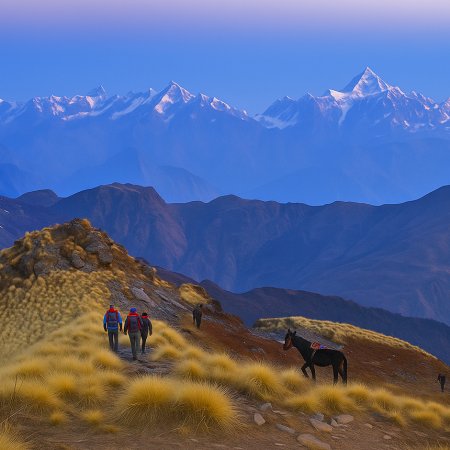
The Hampta Pass itself lies at 4,270 m (14,100 ft). This altitude is moderate but high enough to offer dramatic panoramic views of peaks such as Indrasan, Deo Tibba, and Hanuman Tibba. The pass acts as a natural bridge between two contrasting worlds — green Kullu and barren Spiti.
No. The Hampta Pass Trek is ideal for beginners wanting to experience their first high-altitude Himalayan adventure. The route is well-defined and supported by professional trek operators. However, trekkers must prepare physically since the pass climb can be demanding.
Basic to moderate fitness is needed. You should be able to walk 6–7 km daily with a backpack. A month before the trek, focus on:
The trek passes through the Kullu Valley, known for its ancient temples, apple orchards, and warm Himachali hospitality. Once you cross the Hampta Pass, you enter the Lahaul and Spiti region, a Buddhist-influenced landscape with monasteries, prayer flags, and stone huts. This contrast in culture — from lush Hindu settlements to stark Tibetan-style villages — is as fascinating as the landscape transformation itself.
In Manali, trekkers stay in hotels or hostels. During the trek, accommodation is in tented camps set up at scenic sites such as Chika, Balu Ka Ghera, and Shea Goru. Each tent (2–3 sharing) includes sleeping bags and mats. Campsites are equipped with kitchen tents and toilet setups. The final night in Chatru may also be a campsite or dhaba stay depending on the operator.
Yes. Forest and camping permits are required since the trail passes through protected forest zones. These are arranged by Trekking Compass (your trek organizers). If trekking independently, you can obtain them from the Manali forest office. ID proof and medical fitness declarations may be required.
The trek begins at Jobra (9,800 ft), a short drive from Manali.
Mild altitude symptoms (headache, fatigue) can occur above 3,000 m, but serious AMS is rare since the ascent is gradual. Staying hydrated, avoiding alcohol, and ascending steadily are key. If extending to Chandratal Lake (4,270 m), trekkers should be cautious and well-acclimatized. Guides usually carry oxygen cylinders for safety.
Yes, it’s one of the safest Himalayan treks, especially for first-timers. The route is well-traversed, guides are trained, and camps are properly set up. However, weather in the Himalayas can change rapidly, especially near the pass. Trekkers must carry warm layers, rain gear, and follow their trek leader’s instructions closely.
Because it’s the perfect introduction to high-altitude trekking — short, scenic, and diverse. It offers everything: green valleys, waterfalls, snowfields, glaciers, and desert landscapes — all within a week. The thrill of crossing a Himalayan pass without needing technical climbing skills, combined with the cultural and natural diversity, makes Hampta Pass one of India’s most rewarding treks. Standing at the top of the pass and looking at the contrast between lush Kullu and barren Spiti is a sight that stays forever in a trekker’s heart.
Our trek leaders are trained in first aid and equipped with oxygen cylinders and stretchers. The nearest medical facilities are available at Manali, and evacuation arrangements are made if required. Travel insurance covering trekking is strongly advised.
Handpicked routes with strong scenery, reliable pacing, and a premium featured block that still stands apart from the rest of the archive page.
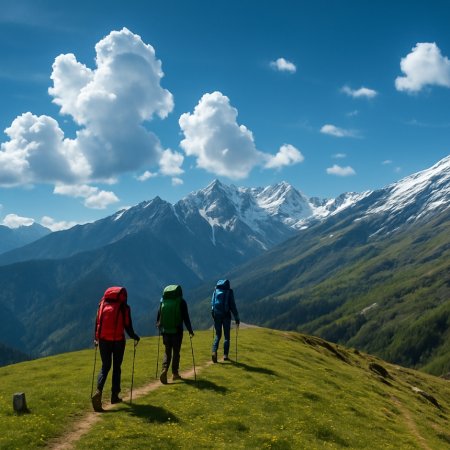
Crafted routes, reliable execution, and a trekking experience that feels premium from planning to summit.
 Safety
Route checks, first-aid readiness, and trained leaders to keep every step confident.
 Routes
Better pacing, better camps, and real acclimatization designed for experience, not speed.
 Groups
Less crowd, more care so you enjoy the trek, not just finish it.
 Trust
Trust
Clear inclusions, no hidden surprises, and real human support on WhatsApp.