

 Duration
 Route
Route Price
Price
 Safety
Safety & On-Ground Support
Route checks, first-aid readiness, and trained leaders to keep every step confident.
Devotees sometimes prefer to go for an individual dham due to time restraints. Therefore, Trekking Compass brings to you Kedarnath Dham Yatra. The yatra concludes in 6 days and 5 nights. The journey to Lord Shiva’s abode at Kedarnath is a strenuous one, but the chants of "Om Namah Shivay!," "Har Har Mahadev!" etc. keep the devotees going.
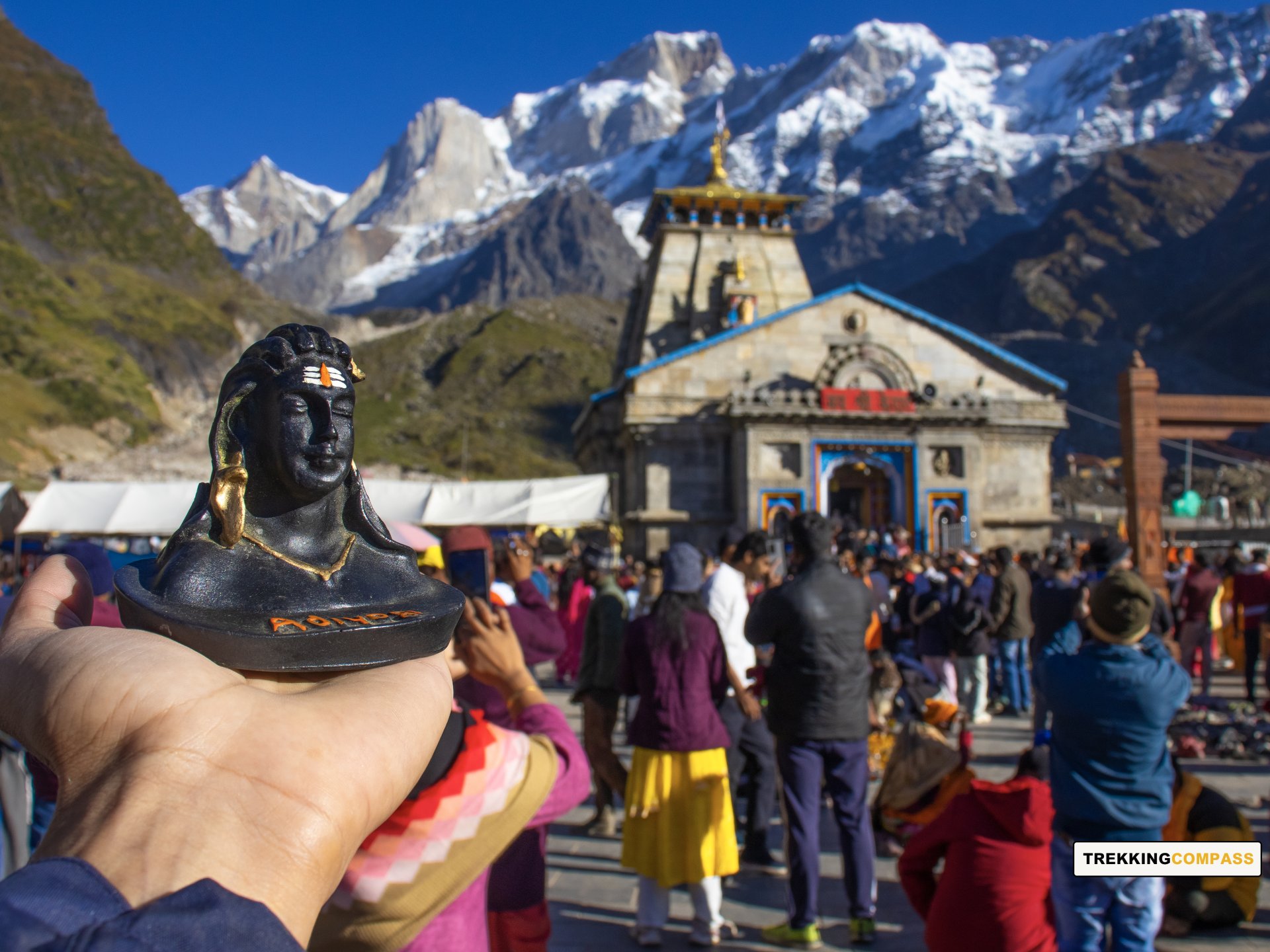
While on the 22 km trek to Kedarnath Temple, devotees understand the penance of the Pandavas, for sure. It's the most visited of Lord Shiva's shrines and is located at a high altitude. This temple is among the 5 Kedars revered by Hindus, worldwide. Its significance is elevated as it is one of the 12 Jyotirlingas around India.
The journey map includes the following relevant markers (Dhams):
Delhi → Haridwar → Kedarnath → Haridwar → Delhi
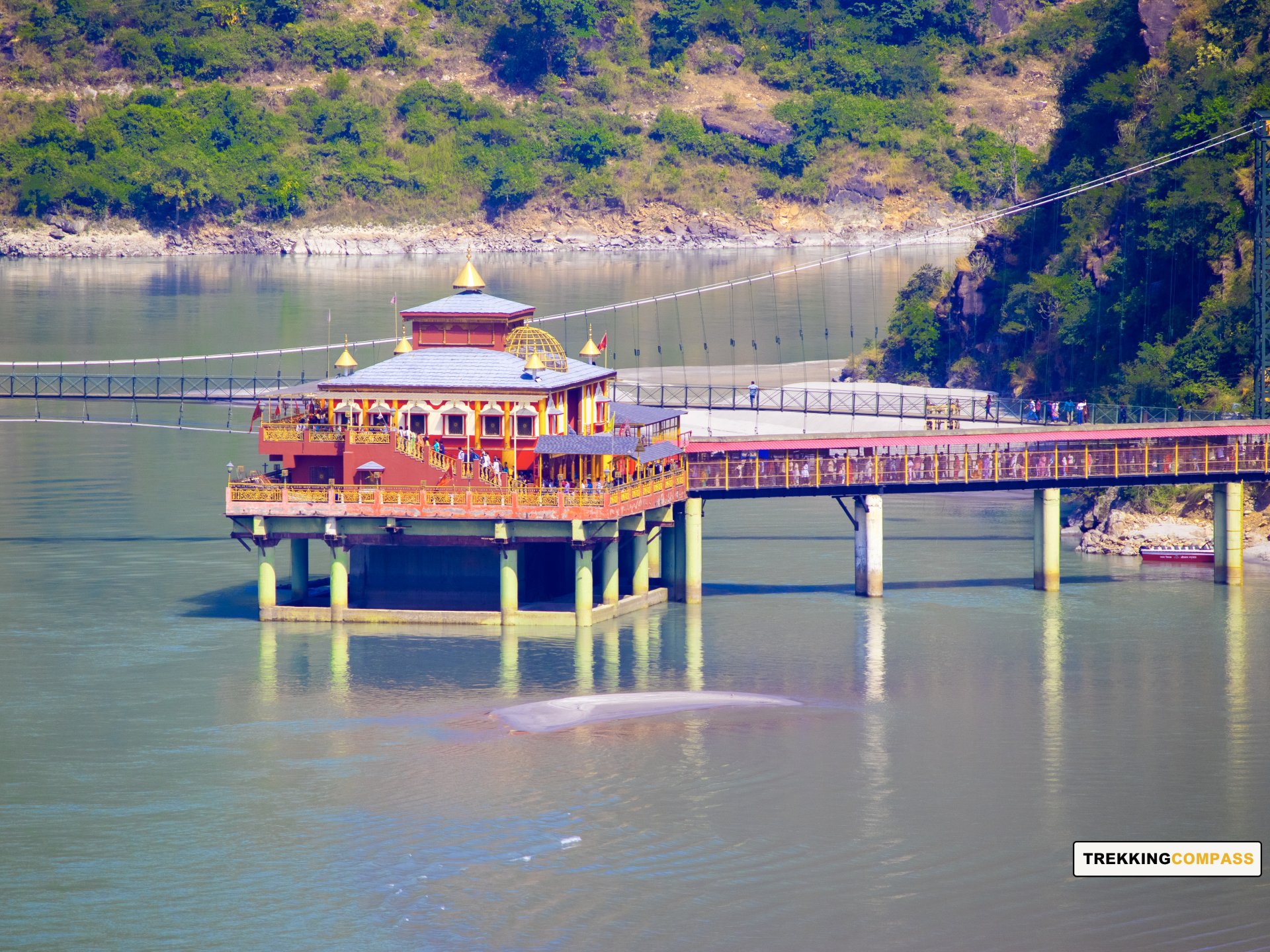
This Haridwar to Haridwar, round trip has many visit-worthy stops enroute. One of these spots is the Dhari Devi Temple, famously known for the Kedarnath floods. The proper route for Kedarnath Dham is explained below:
Delhi → Haridwar → Sitapur → Sonprayag → Gaurikund → Kedarnath → Gaurikund → Sonprayag→ Sitapur → Haridwar → Delhi
For more details, check the Kedarnath Dham Itinerary below. If your doubts persist, contact us here.
The day starts when you meet our associate at the given destination in Delhi. The next step is to board the taxi from Delhi to Haridwar. The drive is fascinating as you witness Delhi's hustle disappearing, slowly turning into serene landscapes of the hills. On this 240 km drive, you see the River Ganges, Patanjali Yogpeeth, Amarpur Ghat, etc. This 5 hrs (approx.) journey, will bring you to a well-deserved rest at Haridwar. You get much-needed time for your Kedarnath Yatra, starting tomorrow.
The day starts with breakfast and a beautiful morning in Haridwar. Soon after, you meet our travel representative and board the taxis for Sitapur. Driving through the spiralling roads, lined with pines, along river Ganga and Alakhnanda, you reach Sitapur by evening. After the hotel check-in, you can explore Sitapur or rest for the trek tomorrow. Tomorrow is a big day, especially with the 22 km long trek.
There are many temples on your way to Sitapur. They are Mata Dhari Devi Temple, Shree Vishwanath Temple Guptkashi, Shree Kamaleshwar Mahadev Temple, Raj Rajeshwari Mandir, Vashishth Gufa Temple, etc. On the way to Sitapur, you will also encounter Triveni Ghat, Rudraprayag, Rishikesh, Devprayag, Srinagar, Ukhimath, etc.
Your morning starts with a light walk ( 700 m ) from Sitapur to Sonprayag taxi stand. Here, you board taxis for Gaurikund, which is a 6 km drive from Sonprayag. At Gaurikund, devotees have two options;
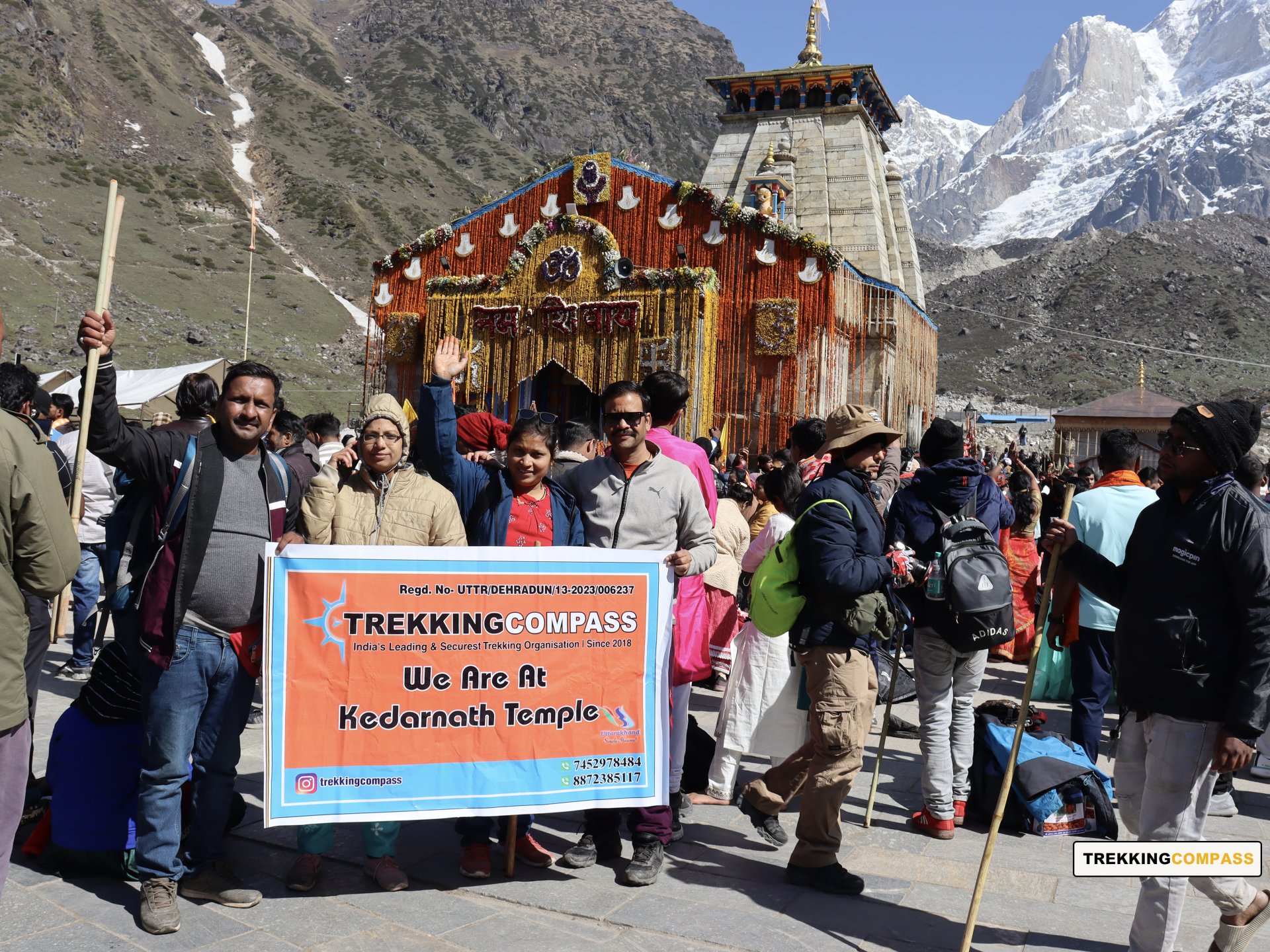
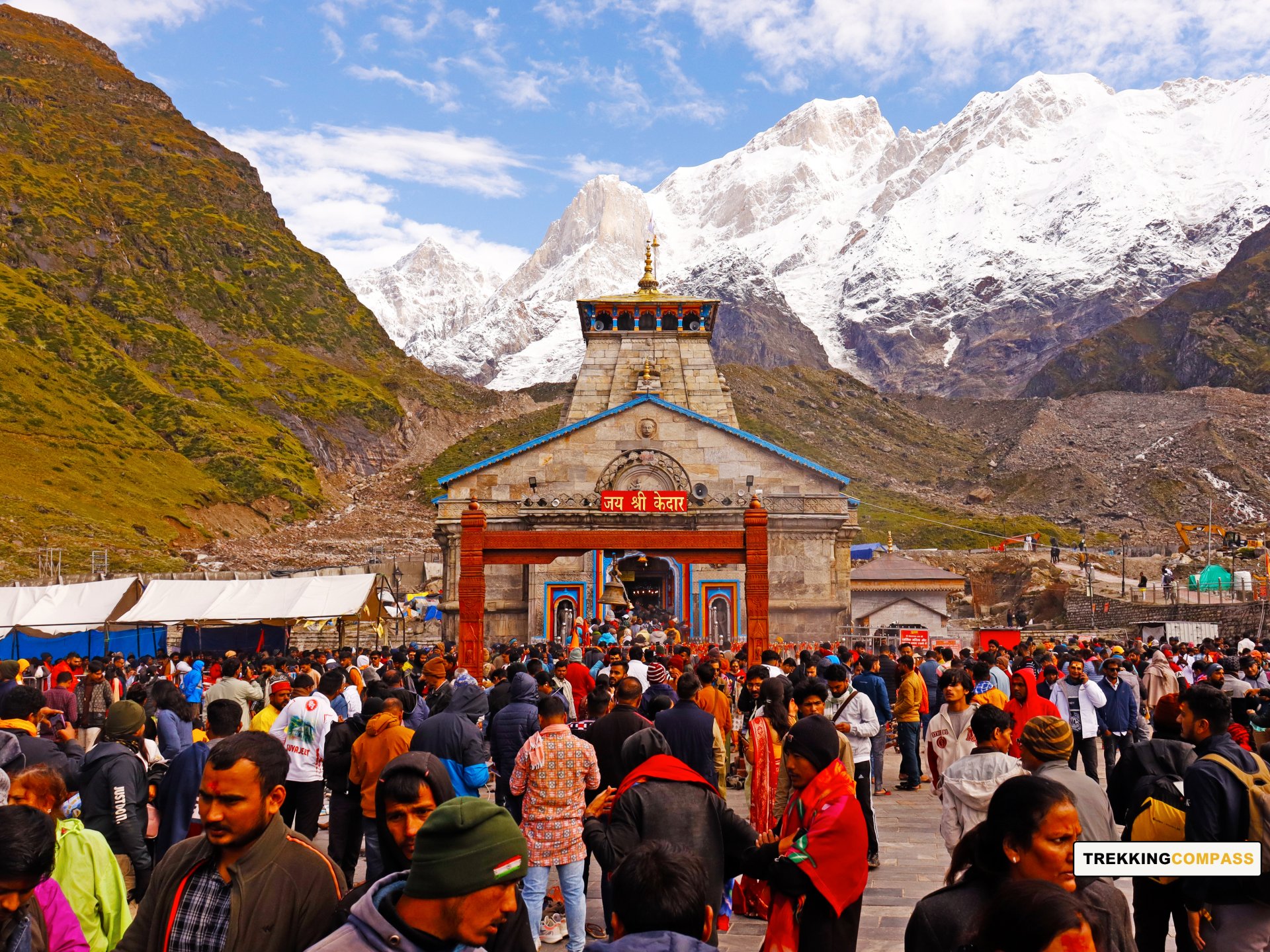
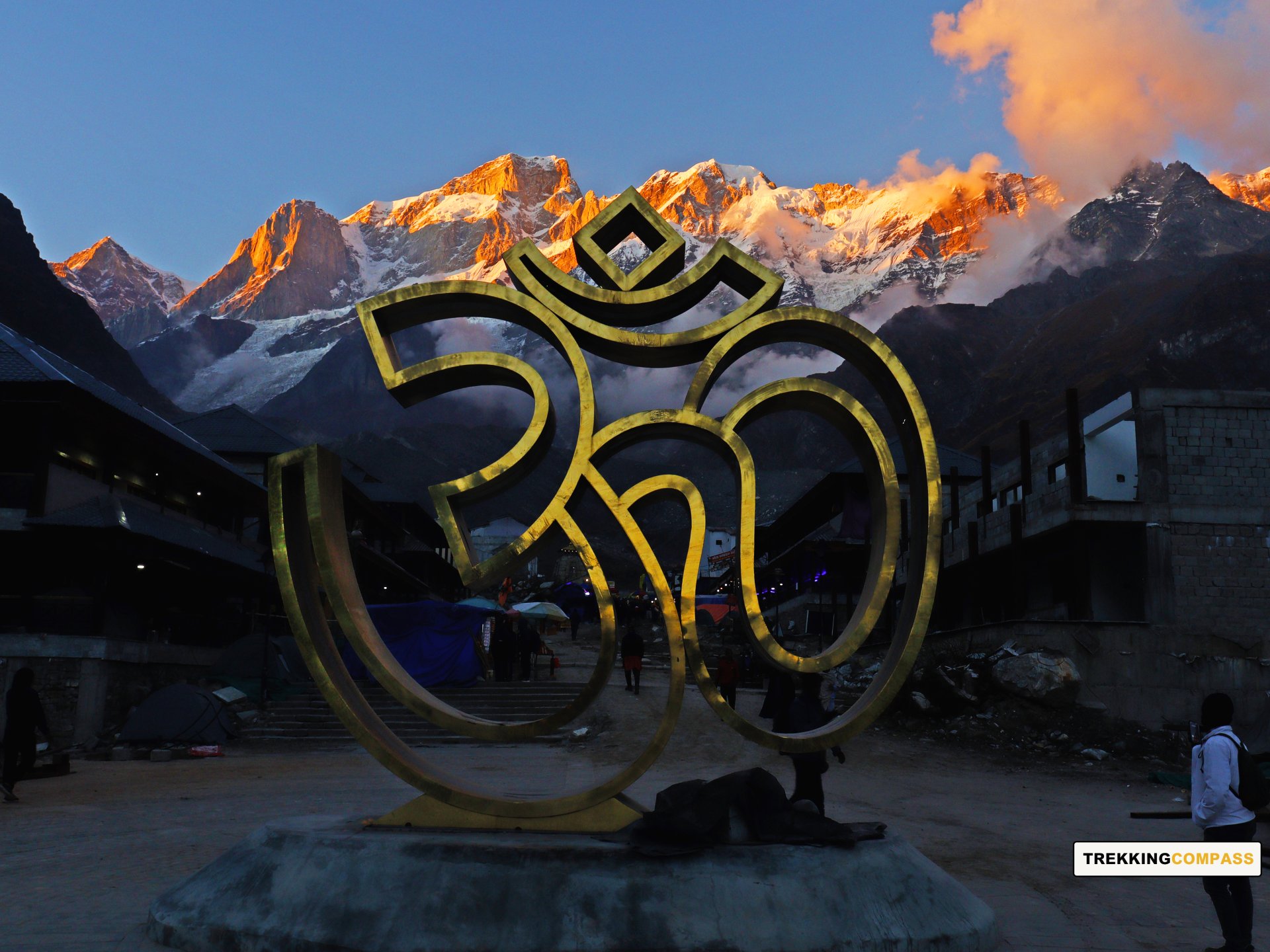
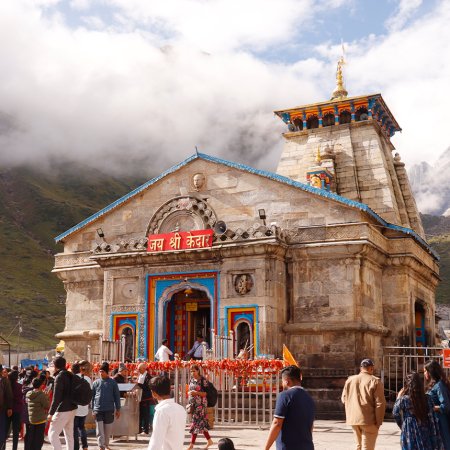
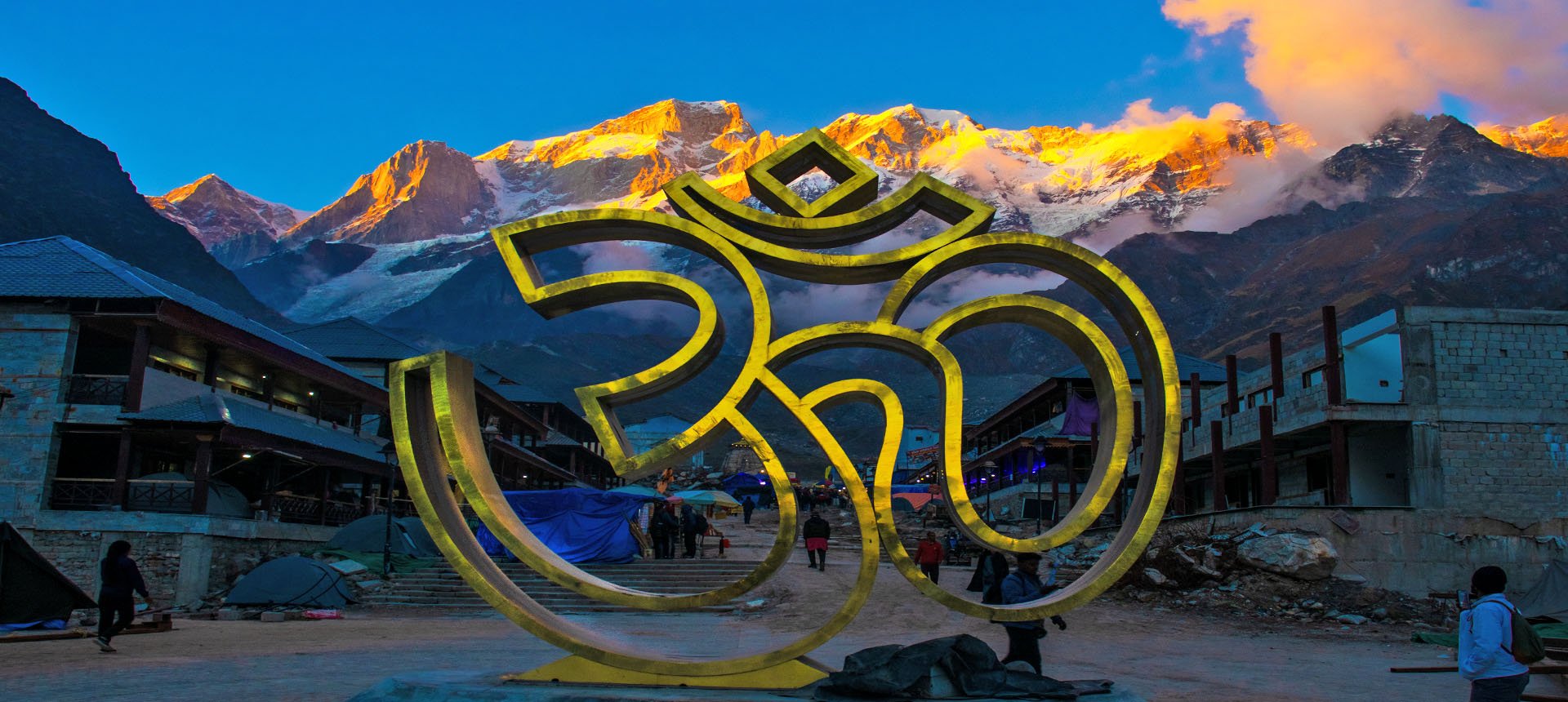
Kedarnath Dham tests your patience and perseverance to get the darshan (view) of, Lord Shiva’s idol. After stops and light snacking at some intervals, you eventually reach Kedarnath Dham, at the right time for evening aarti (prayer). The Kedarnath Temple lights majestically, in the evening’s hue, giving you a one-in-a-million chance to look at Kedarnath Dham.
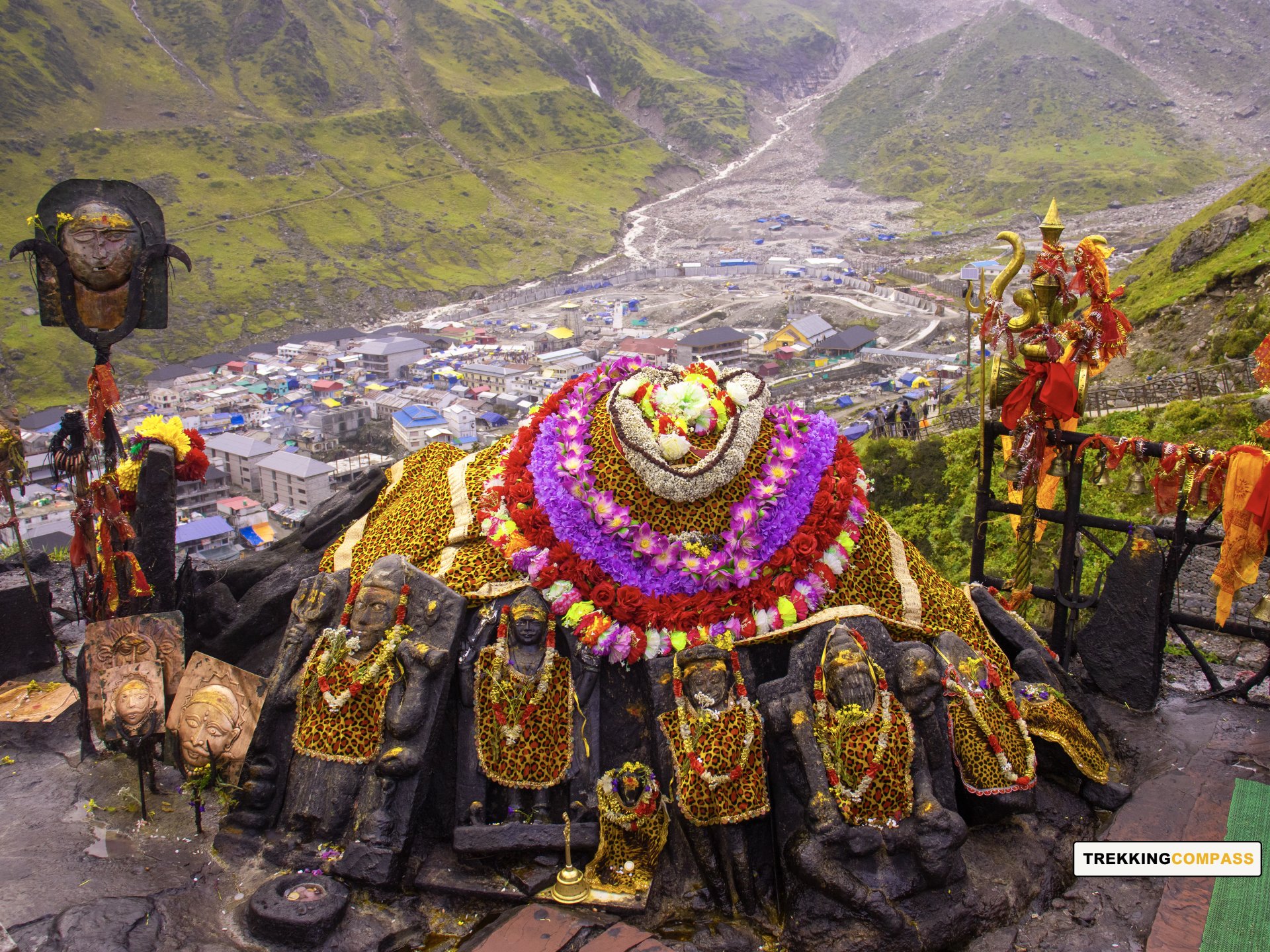
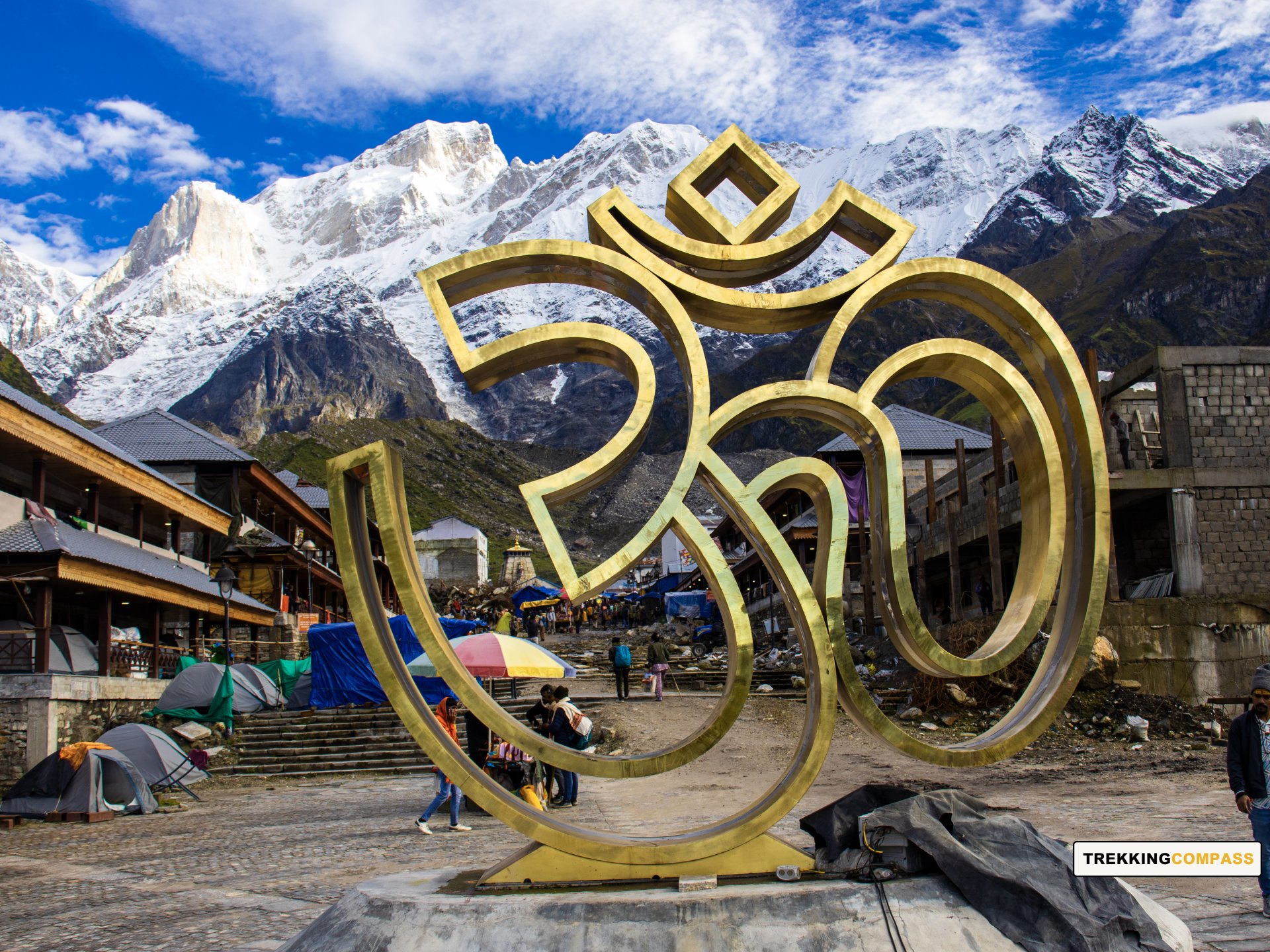
Kedarnath Dham, apart from its religious significance, is also famous for its placement amidst the Garhwal Himalayan Ranges. The Dham’s backstory is one of Lord Shiva’s trials of the Pandavas’ intentions. He wanted to test their patience and perseverance and the Dham's location continues to do so at present.
Pandavas built Kedarnath Temple to worship the back hunch of Lord Shiva in bull-from. This with 4 other Lord Shiva temples in Uttrakhand makes Panch (5) Kedar. Lord Shiva is the Destroyer, in Hindu Mythology. He destroys to make way for more creation and by destroying the inner demons of the devotees, he helps them turn a new leaf.
Once the evening aarti is done, you'll all retire to camps or dormitories after dinner at Kedarnath.
It's the day for Kedarnath Dham Darshan, you wake up early in the morning and take a bath. After soaking in the divinity of Lord Shiva, have your breakfast and descend to Gaurikund. For devotees with walking-related issues, mules and horses are available.
The descent brings you views of mountains that you will cherish for a lifetime. Other than that, the whole idea of this day is to trek down to Gaurikund, take a taxi to Sonprayag, and walk to Sitapur. The evening will call for a hotel check-in, where you have dinner and retire for the night.
The day starts with breakfast at Sitapur and ends at Haridwar. The drive from Sitapur to Haridwar gives you chances to explore places in Uttarakhand like Rishikesh, Haridwar, Srinagar, Devprayag, and Rudraprayag. The Garhwal Himalayan range is also a constant site at some places on the route, the views are not as up-front, but they are beautiful nonetheless.
The Rudraprayag confluence on the way, gives you the chance to get the darshan of River Bhagirathi and Alaknanda together. This darshan makes up for the devotees not being able to visit Gangotri Dham, some might stay. In Haridwar, You will stay at the hotels or homestays booked by us. You can spend the rest of your day resting or choose to explore Haridwar.
You will return to Delhi today, escorted by our travel associate via taxi. The journey will take around 8 hours, giving you time to rest and reflect on the memories of our Kedarnath Yatra. For those not residing in Delhi, you will also have a day to explore the capital city of India.
The Kedarnath Yatra, also known as the Ek Dham Yatra, is a sacred journey dedicated to Lord Shiva, one of the principal deities of Hinduism. Situated in the Rudraprayag district of Uttarakhand, the Kedarnath Temple lies at an altitude of 3,583 meters (11,755 feet), nestled amidst the Garhwal Himalayas near the Mandakini River. It is one of the twelve Jyotirlingas of Lord Shiva and part of both the Char Dham and Panch Kedar circuits. The temple stands as a symbol of resilience and devotion — rebuilt many times, yet still enduring snowstorms, floods, and time itself. For devotees, a visit to Kedarnath signifies washing away past karma, attaining inner strength, and merging one’s spirit with divine energy.
The temple opens annually on Akshaya Tritiya (around late April or early May) and closes in November (Kartik Purnima), before the onset of heavy snow.
The trek from Gaurikund to Kedarnath is a moderately challenging but scenic route that follows the Mandakini River.
Key stops along the trek include Jungle Chatti, Bheembali, and Linchauli, each offering refreshment stalls and medical support.
At 3,583 m (11,755 ft), Kedarnath experiences cold weather year-round.
According to legend, after the Kurukshetra war, the Pandavas sought Lord Shiva to absolve their sins. The Lord, avoiding them, took the form of a bull and dived into the ground at Kedarnath — his hump remained here while other parts surfaced at four other locations known as the Panch Kedar (Tungnath, Rudranath, Madhyamaheshwar, and Kalpeshwar). The temple, believed to be over 1,200 years old, was established by Adi Shankaracharya in the 8th century. The Jyotirlinga symbolizes the eternal and indestructible presence of Lord Shiva amidst nature’s mightiest forms.
A typical Ek Dham Yatra takes 3–5 days including travel and darshan.
Sample itinerary:
Accommodation options vary depending on location:
Registration for the Kedarnath Yatra is mandatory through the Uttarakhand Tourism Department.
The serenity of the Mandakini River flowing beside ancient Himalayan forests.
Yes, due to the high elevation, some trekkers may experience mild Altitude Mountain Sickness (AMS) — headaches, fatigue, or breathlessness. Acclimatizing in Guptkashi or Sonprayag before ascending helps. Stay hydrated, avoid alcohol, and walk at a steady pace. Medical tents and oxygen cylinders are available en route and near the temple complex.
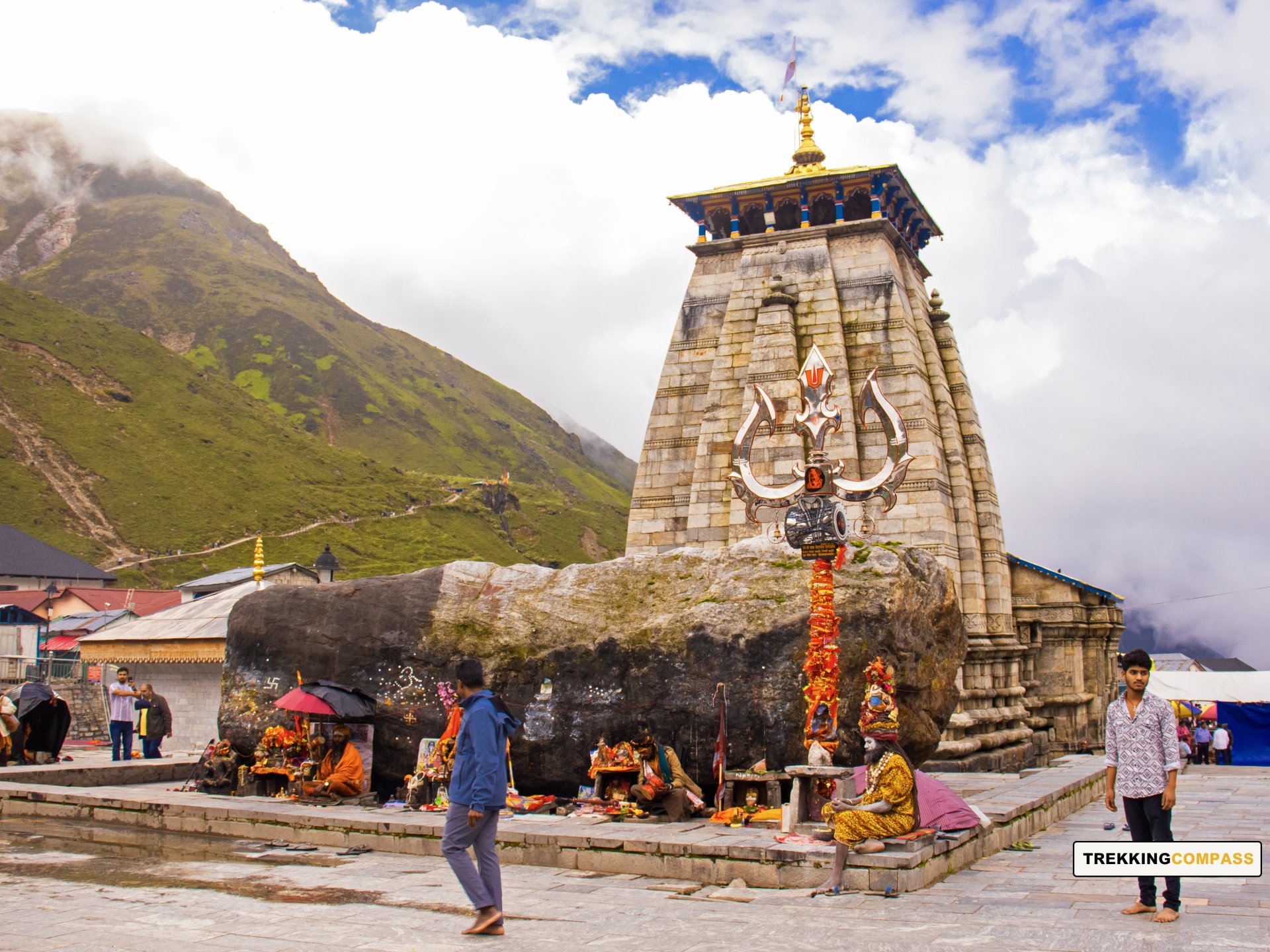
In June 2013, a massive cloudburst triggered devastating floods and landslides, destroying most of Kedarnath town. However, the Kedarnath Temple survived miraculously. A large boulder, now known as the Divine Rock (Bhim Shila), lodged itself behind the temple, diverting the floodwater and saving the sanctum. This event strengthened devotees’ faith in Lord Shiva’s protective power and renewed the temple’s spiritual significance worldwide.
Yes, thousands of senior pilgrims visit every year.
Tips for comfort and safety:
Essentials include:
At Trekking Compass, we combine devotion with professionalism. Our Kedarnath Yatra packages include end-to-end arrangements — transport, permits, accommodation, guide assistance, and temple darshan coordination. We ensure safety through registered local experts, 24/7 support, and hygienic stays even in remote high-altitude zones. Whether you prefer trekking through scenic routes, helicopter travel for convenience, or a spiritual family retreat, Trekking Compass curates experiences that blend comfort with divinity. Our mission is to make your Kedarnath journey not just a pilgrimage — but a life-changing Himalayan awakening.
You can easily reach Delhi by air, train, or bus from any major city in India. Indira Gandhi International Airport (DEL) is well connected with daily domestic and international flights. Delhi also has excellent railway connectivity — New Delhi, Old Delhi, and Hazrat Nizamuddin stations serve most routes. For nearby travelers, intercity Volvo buses and private cabs are convenient options. Once in Delhi, our meeting point details and pickup instructions will be shared prior to departure.
Crafted routes, reliable execution, and a trekking experience that feels premium from planning to summit.
Safety
Route checks, first-aid readiness, and trained leaders to keep every step confident.
 Routes
Better pacing, better camps, and real acclimatization designed for experience, not speed.
 Groups
Less crowd, more care so you enjoy the trek, not just finish it.
 Trust
Trust
Clear inclusions, no hidden surprises, and real human support on WhatsApp.